Showing posts with label Author Interview. Show all posts

Tuesday, August 25, 2015

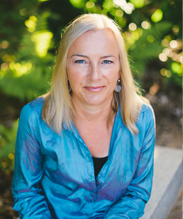
August Author Interview: Laura McNeill

{Note to followers: if you want an email when a new post goes up, go the the left column and subscribe for emails. Thanks.}

When fellow WFWA member Densie Webb mentioned Laura McNeill’s newest book, Center of Gravity, I had to get it. Check out the Amazon descriptioin, and you’ll understand why it was a must read for me. Also, check out Laura’s website www.lauramcneill.com

<><><><><> 

 Her whole life, Ava Carson has been sure of one thing: she doesn’t measure up to her mother’s expectations. So when Mitchell Carson sweeps into her life with his adorable son, the ready-made family seems like a dream come true. In the blink of an eye, she’s married, has a new baby, and life is wonderful.

Or is it?


When her picture-perfect marriage begins unraveling at the seams, Ava convinces herself she can fix it. It’s temporary. It’s the stress. It’s Mitchell’s tragic history of loss.

If only Ava could believe her own excuses.


Mitchell is no longer the charming, thoughtful man she married. He grows more controlling by the day, revealing a violent jealous streak. His behavior is recklessly erratic, and the unanswered questions about his past now hint at something far more sinister than Ava can stomach. Before she can fit the pieces together, Mitchell files for divorce and demands full custody of their boys.


Fueled by fierce love for her children and aided by Graham Thomas, a new attorney in town, Ava takes matters into her own hands, digging deep into the past. But will finding the truth be enough to beat Mitchell at his own game?


Center of Gravity weaves a chilling tale, revealing the unfailing and dangerous truth that things—and people—are not always what they seem.

<><><><><>

ZM: The structure of Center of Gravity is intriguing! How did the rotating POV develop?

Laura: Thank you so much! When I first began writing the novel, I decided it would be compelling to have the story told from several different perspectives – I love the way Jodi Picoult does this in many of her books – and decided to give it a whirl with Center of Gravity. I think that, Jack, the 8-year-old protagonist, adds an element of truth and authenticity to the storyline. He is a pure and innocent observer, and tells things exactly as he sees them. As for Ava, the female protagonist, and Graham, her attorney, they both have different ways of telling the story, and each perspective – I hope – adds richness and depth to the novel.

ZM: Your books are classed as Women’s Fiction or Women’s Fiction with elements of Romance. What’s your opinion of Women’s Fiction as a genre?

Laura: I think that booksellers and bookstores have to put a genre label on books, but for me, if a story is well written, it doesn’t matter if what genre it’s been placed in. Women’s fiction is such a broad term—and there are so many sub-genres under that classification. Center of Gravity definitely falls under women’s fiction, and there are elements of romance and suspense.

It’s my hope that the Center of Gravity cover, the story summary, and recommendations from Amazon and Goodreads reviewers will intrigue readers enough to give the book a try—no matter what genre!

ZM: What comes first for you—character, theme, setting, or plot? How do your stories come together?

Laura: When planning out a novel, I generally have a story spark—an idea or question that intrigues me. It may be an idea from reading news headlines; it could be from personal experience, or something that a friend shares with me. If that idea stays with me, and I start thinking about possible characters, storylines, twists, etc., then I know that it’s something that I should pursue.

With Center of Gravity, the question that came to mind was “What if everything that you think is real and true in your life is a lie?” I spent a great deal of time plotting out the storyline, revising, and trying to get the character voices just right. I talked to friends about their break-ups; I interviewed marriage counselors and therapists, and did lots of research on personality disorders—so fascinating (and a little scary!).

Before Center of Gravity was published, I wrote four previous women’s fiction novels—all set in the South—under the pen name Lauren Clark, so setting Center of Gravity in Mobile, Alabama seemed a natural fit.

ZM: Many craft books stress that writers must read and read a lot. Who is your favorite author, or what is your favorite genre? What draws you to a book you read for enjoyment?

Laura: Reading a lot is a must for authors! I think reading—and reading in all different genres—recharges your creativity, triggers new ideas, and allows you to explore new settings, characters, and storylines.

I am such an eclectic reader, but among my favorite authors are Jennifer Weiner, Jodi Picoult, Anita Hughes, Sue Monk Kidd, and Joshilyn Jackson. As for a favorite genre, women’s fiction is my go-to, but I also love YA (Divergent, Hunger Games) suspense/thriller (Stieg Larsson, James Patterson) and romantic comedy (Sophie Kinsella).

Generally, recommendations from friends, book club picks, talking to employees at our local indie bookstore, and a compelling or interesting cover/summary draw me to books for enjoyment. I love checking out what’s new on Goodreads, Amazon, and Audible. I travel quite a bit, so I stock up on all sorts of audiobooks for my time on the road.

ZM: I can’t wait for your next book! Tell us a bit about Sister Dear.

Laura: My second HarperCollins/Thomas Nelson book will be released in April of 2016. Sister Dear is the story of a woman, Allie Marshall, who goes to prison for a crime she doesn’t commit, leaving behind a 5-year old daughter.

When Allie is paroled 10 years later, she hopes to reclaim her quiet life and move on, but her daughter, now a teenager, soon challenges her innocence. In her quest to find justice, Allie discovers that the one person she trusts most committed the ultimate betrayal a decade earlier. Think White Oleander meets Orange is the New Black.

<><><><><>

 Laura adores hot coffee, good manners, the color pink, and novels that keep her reading past midnight. She believes in the beauty of words, paying it forward, and that nerds rule the world. Laura is a fan of balmy summer nights, fireflies, and pristine mountain lakes. She lives in Alabama with her two sons.
You can find Laura Tweeting @Lauramcneillbks and blogging at lauramcneill.com. Laura’s suspense novel, Center of Gravity is available wherever books are sold. 

<><><><><>
Next Week: IWSG: Who's Supporting You? 

Tuesday, July 7, 2015

Author Interview: Barbara Claypole White

{Note to followers: if you want an email when a new post goes up, go the the left column and subscribe for emails. Thanks.}

Be sure to comment and include your email address for a chance to win a copy of The Perfect Son. I'll draw a lucky winner by random. :-) Here's your chance to get in on a great author!
[The giveaway is closed. Congratulations, Nicole!]


I first met Barbara Claypole White when the WFWA email loop formed before the association took official flight in September 2013. Be sure to check out Barbara’s website www.barbaraclaypolewhite.com  Her first book—The Unfinished Garden—was an amazing, deep look at OCD. The examination of an emotional illness made me sit up and cheer! Barbara is an author who can take complex issues and distill them into captivating stories. I’ve been a fan ever since.

The Unfinished Garden is a lovely story with two damaged characters finding the road a bit bumpy, but worth the trip. This is a good read that takes readers on a tour of living with OCD, and the problems it presents for those who love the sufferer. White's ability to share the journey of her characters allows readers to have empathy.


The In-Between Hour is an absolutely fabulous story! I'm never forget Will, Hannah, Jacob, and Galen. They're not characters; they're living, breathing people. Grief and are true to life and White’s story is deeply moving.


What's the worst thing that can happen when you must have everything in control? That's exactly the question in Barbara Claypole White's latest--The Perfect Son. Her insightful and delicate touch with characters suffering from mental illness is a hallmark of her novels.  The Perfect Son solidifies my opinion of her expert story telling.

ZM: Welcome to In the Shade of the Cherry Tree, Barbara! I love your books and the truth of families that live with OCD, dementia, grief, and Tourette’s. What’s been your inspiration for “Hopeful Family Drama with a Healthy Dose of Mental Illness”?

Barbara: Thank you. I’m thrilled to be here, WFWA sister! Everything I write comes back to being the mother of a brilliant young man who has battled obsessive-compulsive disorder for the last sixteen years. We’ve visited hell together numerous times, and even when the OCD monster retreats into the shadows, I’m waiting for it to pounce. The sad reality is that mental illness is treatable not curable, demands constant management, and can often be fatal. As a mom I need to believe tomorrow can be better. And you know what? Often it is.

ZM: The Perfect Son is trending on Amazon—I saw you listed with the likes of Stephen King and Diana Gabaldon. Tell us what the road to publication for your latest book has been.

Barbara: I still can’t believe what’s happened with THE PERFECT SON. From day one this was my wild child, and it was written to the ticking clock of deadline. I had horrible problems with research and plot, lost more titles than anyone should have to lose, and right after I turned in the completed manuscript…my publisher cancelled my contract. But Cinderella does go to the ball if she has a kick-ass agent, and within two weeks I had another offer. When my new editor mentioned putting the book forward for the Kindle First Program, I didn’t want to even hope…

ZM: How do you work to flesh out your characters? Do they come to you fully formed, or do you have to mold them? I also noticed that many of them garden. Is that a nod to your own gardening experience?

Barbara:
I have a sense of the characters when I start, but nothing more. I research, research, research and then I rewrite, rewrite, rewrite. I spend months trying to get those first few chapters to speak to me. When a character says something that makes me punch the air and go, “yes!” I know I’ve found his or her voice. Once I have my characters’ voices, I can move forward with the story.

Yes, a number of my characters garden. I’m a huge woodland gardener, and that definitely plays a role. But I think it’s more about trying to understand the creative side of my characters’ personalities. Most of them battle some form of invisible disability and how they relate to art and music is fascinating to me. Is it therapeutic for them, does it give them escape? I devote a ridiculous amount of time to thinking through each character’s relationship to music, for example, because music is such a great manipulator of emotions.

ZM: You and I both write Women’s Fiction. It’s a very broad genre with many sub-categories. I love your use of family drama to help define your niche. What’s your definition of women’s fiction and how you deal with the misunderstanding that the entire genre is Chick Lit or another sub-genre?

Barbara: I wasted so much energy in the early days trying to explain—even to family members—that I didn’t write romance, and now I just tune it all out. I’m dark and I’m quirky, and I write emotionally layered drama that focuses on what it means to be part of a family, whether that role is as a husband or wife, a daughter or a son. Because I lean toward the male POV—I really am fascinated by the emotional lives of messed-up men!—some readers claim I don’t write women’s fiction. The truth is that many novels don’t fit neat genre definitions. For example, look at the work of Jodi Picoult or Diana Gabaldon. I think writers should write their passion and not worry about labels. That’s not exactly an answer, is it? 


ZM—Many craft books stress that writers must read and read a lot. Who is your favorite author, or what is your favorite genre? What draws you to a book you read for enjoyment?

Barbara: I don’t think I have a favorite genre, because I read all over the place. Basically if someone hands me a book and says, “This is really good, you should read it,” I do. I read a lot of memoirs, often for research, but sometimes I’m in the mood for a fast-paced thriller and sometimes I want to slow the world down with beautifully written literary fiction. I reread classics when I can (REBECCA is on my list for the summer), and I like to pick up debut fiction. If I had to single out favorite authors, I would choose Jodi Picoult, Marian Keyes, and the Irish writer Denyse Devlin/Woods. I’ve pretty much read everything those three authors have written.

ZM: What’s next? What story are you working on now?

Barbara: Hmm. I can’t answer that right now but stay tuned.

ZM: I, for one, can't wait! Thank you, Barbara for stopping In the Shade with us. Bring your next story on!

English born and educated, Barbara Claypole White lives in the North Carolina forest with her family. Inspired by her poet/musician son’s courageous battles against obsessive-compulsive disorder, Barbara writes hopeful stories about troubled families with a healthy dose of mental illness. Her debut novel, The Unfinished Garden, won the 2013 Golden Quill Contest for Best First Book, and The In-Between Hour was chosen by SIBA (the Southern Independent Booksellers Alliance) as a Winter 2014 Okra Pick. For more information, or to connect with Barbara, please visit www.barbaraclaypolewhite.com.

 Next Week: The origins of Cherry Hill in pictures and snips!
 

Tuesday, May 26, 2015

May Author Interview: Samantha Bryant

{Note to followers: if you want an email when a new post goes up, go the the left column and subscribe for emails. Thanks.}

I met Samantha Bryant through the Women’s Fiction Writers Association and the Insecure Writers Support Group. It’s a delight when you get to know someone and find that they have a book for you to read. Check out her website HERE. Believe me, I love Going Through the Change.

Here’s my Goodreads review:

Going Through the Change
is chock full of black humor that skewers the twin notions that menopausal women aren't as good as younger women and that menopause is a disease that must be treated. Bryant's ladies are superheroes. Read this one if you are postmenopausal, peri-menopausal, or a long way from "the change."

ZM: It’s a delight to welcome Samantha to The Shade. ;-)
Tell us, Samantha, where did the idea come from to make all these wonderful menopausal characters so heroic and funny?


Samantha: Thanks so much for inviting me. I enjoy your blog and am excited to be here.

This novel started as a conversation with my husband. We're both superhero fans, the kind of folks who read comic books and graphic novels and watch superhero shows and movies. I don't remember why now, but we were talking about how so many superhero stories are about teenagers, the implication being that hormones and superpowers are intertwined. So, I said that if hormones caused superpowers, menopausal women would be the most powerful people on the planet. He said, "Write that down!" And I did.

Once I started talking about the idea with my writer friends (mostly women), the story really started to take shape in my mind and I fell in love with the characters. I'm working on a sequel with them right now, and I still love these women. I think they are heroic and funny, too, just like many of the women in my life.

ZM: How did you start writing? Tell us a bit about your journey to publication.

Samantha: My love of writing is life-long, starting with poetry in first grade. There's never been a time in my life since when I didn't write, though my level of dedication really varied, and what I wrote changed over time, from poetry and plays to stories and essays to journals to blogs and novels. I first took myself seriously as a writer though, starting about two years ago. That was when I committed to a daily writing habit and starting finishing, polishing, and submitting my work to publishers.

When Going Through the Change was ready to be submitted, I had already been shopping around another novel (which still hasn't found a publishing home) for about a year and a half. I was frustrated with the glacial slowness of the business, where you can wait six months for a simple "no", and was researching indie publishing, thinking it might be a good fit for me. Somewhere in that process, I ran across the idea of an "independent small publisher."

The idea of working with a small publisher really appealed to me, and the more I looked into it, the more I liked what I saw. You don't generally get advances with small publishers, but you get a higher percentage of the sales in royalties. Depending on the particular publisher, you can still get some of the advantages of traditional publishing, too, like having marketing experts to help you and professional cover design and editing.

I found Curiosity Quills in particular through an online connection with another writer who had published a book with them. So far, I've had a very positive experience working with CQ and am hopeful for the future.

ZM: You and I are both in the Women’s Fiction Writers Association. What’s your definition of the genre? I know my stories are more social issue focused. There’s historical WF and literary WF. I could go on and on listing the various flavors. Why do you think Women’s Fiction is such a “big tent”?

Samantha: It really is a tricky genre to define! It includes serious literary work, issues driven dramatic stories, and lighter fare you might call "chick lit" as well as historical stories. I consider my superhero novel women's fiction, too, though some don't agree, since it is also speculative fiction (yet another nebulous category!). I think what really makes a story women's fiction is that it features female characters with a strong growth or change arc. Going Through the Change, by that definition, is assuredly women's fiction.

In my more feminist moments, I am troubled by the need for women's fiction as a category at all. After all, there isn't a parallel category for men. I waffle though. Genre designations are really intended to help readers more than writers.  It's a way of defining what kinds of books you like to read so you can find more of that kind of book. So, if these categories help us find readers, then writers probably shouldn't complain about them.

ZM: Many craft books stress that writers must read and read a lot. Who is your favorite author, or what is your favorite genre? What draws you to a book you read for enjoyment?


Samantha: My favorite author these past few years has pretty consistently been Neil Gaiman. I love the magic wonder of the worlds he writes in and his unflinching honesty in the face of all the ambiguities of his characters and their decisions. It doesn't hurt that he also just has a lovely turn of phrase. in all his work. He's the only writer I automatically order every new book from.

I'm not sure I have one favorite genre, though. I'm a pretty omnivorous reader. For instance, some of my most recent reads are Wilkie Collins's gothic melodrama The Woman in White, the science-fiction classic Ringworld by Larry Niven, Thomas Hardy's Far From the Madding Crowd, Cary Elwes's memoir As You Wish and a collection of apocalyptic short stories called The End is Now. Right now I'm reading The Invisible Woman by Claire Tomalin, which is a nonfiction biography of Nelly Turnan, the long time lover of Charles Dickens and a collection of superhero short stories called The Good Fight. Sometimes I don't even know what drew me to a book. I find a lot of them through serendipity or the recommendation of friends. I'm in two book clubs because I love being led to books that I wouldn't otherwise find on my own.

ZM: What are you working on now? Any plans to let us read it soon? I know we can all do with a bit of humor or any story you want to tell.

Samantha: I've got a few irons in the fire right now. I've got short stories slotted for two upcoming anthologies. I'm working with an acquisitions editor on Cold Spring, the first of a historical fiction trilogy about two sisters at the turn of the twentieth century and am hopeful that we'll have a contract soon. I'm on the final rewrite of Change of Life, the second book in the Menopausal Superheroes series, and hope to send it off to the publisher by the end of this month.  I also have a middle grades novel, Rat Jones and the Lacrosse Zombies, that I'm planning to get back to this summer, along with some short stories and a novella for my superheroes. I've got so many stories I want to tell!

There's a movement on Google Plus under the #saturdayscenes hashtag that I participate in every Saturday, sharing a piece of what I've written during the week before. Following me there is a great way to see what I'm working on as it progresses. I post the pieces on Google Plus, on my Facebook author page, and on Twitter.

ZM: Thank you for dropping by Into the Shade of the Cherry Tree, Samantha! I can’t wait to read some more of your stories.

Samantha Bryant is a middle school Spanish teacher by day, and a novelist and wife and mother by night. In other words, she's a superhero all the time!


Samantha Bryant believes in love, magic, and unexplainable connections between people. Her favorite things are lonely beaches, untamed cliff tops, sunlight through the leaves of trees, summer rains, and children's laughter. She has lived in many places, including rural Alaska, Kansas, Kentucky, Vermont, England and Spain. She is fierce at heart, though she doesn't look it.

She's a fan of Charlotte Brontë, William Shakespeare, Emily Dickinson, Neil Gaiman, Nicole Perlman, and Joss Whedon, among many others. She would like to be Amy Tan when she grows up, but so far it doesn't look like she'll be growing up any time soon.

Samantha writes blogs, poems, essays, and novels. Mostly she writes about things that scare or worry her. It's cheaper than therapy. Someday, she hopes to make her living solely as a writer. In the meantime, she also teaches middle school Spanish, which, admittedly, is an odd choice for money-earning, especially in North Carolina.

When she's not writing or teaching, Samantha enjoys time with her family, watching old movies, baking, reading, and going places. Her favorite gift is tickets (to just about anything).

Tuesday, April 28, 2015

April Author Interview: Alice Jay Wisler

{Note to followers: if you want an email when a new post goes up, go the the left column and subscribe for emails. Thanks.}


I met Alice Wisler through the American Christian Fiction Writers Association and one of the Facebook groups that I frequent. When she highlighted her latest book Under the Silk Hibiscus, I had to read it. I wasn’t disappointed. Be sure to check out her website. I’d already read her lovely book Still Life in Shadows and it was great getting to meet this wonderful author.


Here’s Amazon’s blurb for Under the Silk Hibicus:

During World War Two, Nathan and his family are sent to Heart Mountain, an internment camp in Wyoming for Japanese-Americans. Nathan's one desire is to protect the family's gold pocket watch, a family heirloom brought over from Japan. He fails; the watch is stolen. Struggling to make sense of his life in a bleak camp as the only responsible man of the household, Nathan discovers truths about his family, God, and the girl he loves.

I found the book to be a deep dive into a setting I had only passing knowledge of. Nathan’s story and the view Alice gives of his Japanese American culture is so vivid, you’ll be captured immediately.  Read this book!

<><><><><> 

ZM: Welcome to The Shade, Alice. I love Under the Silk Hibiscus because you let us into Nathan and his family’s life without flinching from the ugliness of the WWII era. How did your knowledge of the Japanese culture aid your depiction of this very real family?

Alice:  Thanks for letting me be your guest, Zan.  It’s good to be here.  Growing up in Japan helped me understand many of the cultural aspects of my fictionalized family in my novel. I know that family, responsibility, and honor are important and highly valued. I wanted to make sure I depicted that with the Mori family.

ZM: How did you start writing? Tell us a bit about your journey to publication.

Alice:  I wanted to write a book ever since I could read books.  I was in first and second grades at Kyoto International School when my teacher, Miss Terwilliger, had me read my stapled-and-stick-figure illustrated stories to my classmates.  She believed in me and that stuck with me over the years.

ZM: What inspires your books? How do you discover the stories?

Alice: People, glimpses of the heart, truths God teaches—those all inspire me. I discover my stories while driving to a conference, while on a walk on a spring morning, when sharing coffee with friends. I keep a little notebook in my purse to jot things down when something strikes me.  Sometimes, the muse hits me during Sunday morning and it looks like I’m taking sermon notes in the church pew, but really, I’m deciding how the sermon topic will fit in with my main character!

ZM: (whispering) I’ve been known to do that, too. It’ll be our secret. ;-)

Many craft books stress that writers must read and read a lot. Who is your favorite author, or what is your favorite genre? What draws you to a book you read for enjoyment?

Alice:  I love contemporary fiction the best.  My favorite authors are Amy Tan and Elizabeth Berg for their ability to capture people and scenes that tug at my heart. I like novels that are well-crafted, have a touch of humor, and are realistic.

ZM: What is your next book about and when can we expect to get to read it?

Alice:  We shall see, Zan, we shall see.  I’m working on a number of both fiction and non-fiction manuscripts right now.

ZM: Thank you for dropping by Into the Shade of the Cherry Tree, Alice! I can’t wait to read some more of your stories.


Alice J. Wisler was born and raised in Japan as a missionary kid. She is the author of Getting Out of Bed in the Morning, and five novels. Rain Song and How Sweet It Is were Christy finalists. Ever since the cancer death of her four-year-old son Daniel in 1997, she has found solace in writing from heartache and teaches Writing the Heartache workshops across the country.
She lives in Durham, NC with her husband and children where they have a wood carving business, Carved By Heart. Visit her website at alicewisler.com.

Next Week: IWSG--Fail Big